
I undertook my medical elective placement in Jakarta, Indonesia in July 2025. This was an incredible experience that taught me so much about healthcare in another part of the world, and gave me invaluable insight into Indonesian culture and society. I would highly recommend Indonesia to any medical student who is considering doing their elective placement abroad. Read on to find out all about it!
❓Why Jakarta?
When planning my medical elective, the only thing I had in mind was that I wanted to go abroad, somewhere far away, where there would the opportunity to learn about a culture and a healthcare system that was different from what I was used to on my placements in the UK.
I applied to a number of different hospitals in a number of different countries, and there are a few reasons why I ultimately chose to go to Jakarta:
🌏Diverse Destination
Jakarta is the capital of Indonesia, and one of the largest cities in the world. Most of my placements in the UK had been in more rural locations, and Jakarta provided a perfect variation. Indonesia is a country in South-East Asia made up of over 17,000 islands. Jakarta is on Java, which is one of the biggest of these islands. There is much to explore on the island of Java, including both bustling cities and idyllic rural landscapes.
🏥 Huge Hospital
The elective took place at the Rumah Sakit Dr. Cipto Mangunkusumo (RSCM) hospital in central Jakarta, which has connections with the Faculty of Health at the University of Indonesia. The hospital is the biggest in Indonesia, with the expansive hospital complex including multiple large buildings, each one going up a dozen or so stories high.
The hospital provides tertiary care for the entire country and covers a huge range of specialties, with both private and public services available. The patients at RSCM hospital come from all over Indonesia, many of them having travelled from the other side of Java, or even other islands. This results in demographic diversity and a range of clinical presentations.
📧Warm Welcome
Planning an elective often involves sending a lot of cold emails and phone calls, and receiving very little in response – or at least, this is what my elective planning looked like! It was a welcome surprise when the University of Indonesia emailed back soon after we initially got in touch, and warmly invited us to do our elective with them. They were helpful and friendly throughout the whole process. The warm welcome we received from them is part of the reason why I chose this hospital – it made the elective planning process much less daunting and much more exciting knowing that they were personally helping us to make the most out of the experience.
We reached out to the International Relations Office of the Faculty of Medicine at the University of Indonesia (FKUI-IRO). The university site and RSCM hospital complex overlap, and the university reached out to specialty departments on our behalf. I chose to focus on surgery, my friend chose to do paediatrics, and we both did a week doing emergency medicine and anaesthetics. All of these departments were happy to have us join them.
🌏 Travelling to Jakarta
Jakarta is very very far away.
It took a grand total of around 30 hours from London to Jakarta, including a layover in Jeddah in Saudi Arabia where the second flight was significantly delayed. Without the delay, the trip should have taken 15-20 hours.
Jakarta is 7 hours ahead of London, so there is definitely a time difference to get used to, and jet-lag is inevitable.
Most international flights to and from Indonesia travel through Jakarta, so to travel to other parts of the country, such as Bali, travellers must take a further flight via Jakarta elsewhere.
🏙️ What is Jakarta actually like?
Jakarta is an enormous, fast-paced, densely-populated, bustling, metropolitan city. It has a population of almost 12 million people. (For context, Greater London has a population of around 9 million.)
We stayed in an Airbnb next to the hospital, which made it the perfect location for travelling to and from placement during the week, and exploring the rest of the city during the weekends and evenings.
The first notable thing about Jakarta is the climate; Jakarta is hot and humid. During the summer months, Indonesia is usually dry, but with global climate change, this period has been interspersed with weeks of heavy rainfall in more recent years.
Walking around Jakarta is difficult due to both the heat, and the traffic-heavy roads. Most people, including tourists and travellers, travel by moped-taxis, which weave their way around the slower-moving cars.
The wealthier parts of the city are full of shopping malls, restaurants, Mosques, and skyscrapers. In the less wealthier areas, there are sprawling favelas and run-down infrastructure. Every street in the city is lined with food markets, which start at sunrise and remain open late into the night.
I felt relatively safe in Jakarta, and in my travels in other parts of South-East Asia. The main causes of concern are the hot temperatures and the busy roads, both of which are a constant in Jakarta throughout the day and night. Tourists should also avoid drinking tap water, and should be wary of the street food, which is found on almost every street, but is not considered safe for travellers unused to eating it. The last safety concern may apply to travellers with a history of respiratory disease, as Jakarta is a heavily polluted city, especially in the central districts.
The people living in Jakarta are mostly Indonesian, but there are also Malay and Chinese populations.
The official and dominant language spoken in Indonesia is called Bahasa, with some regional variations. A history of migration from China and Malaysia, and Dutch colonisation, has also contributed to regional dialects.
The majority of the population in Jakarta are Muslim, a reflection of most of the rest of Indonesia. Bali is an exception, with a mostly Hindu population. Christianity also makes up a small proportion of religious practice in Jakarta.
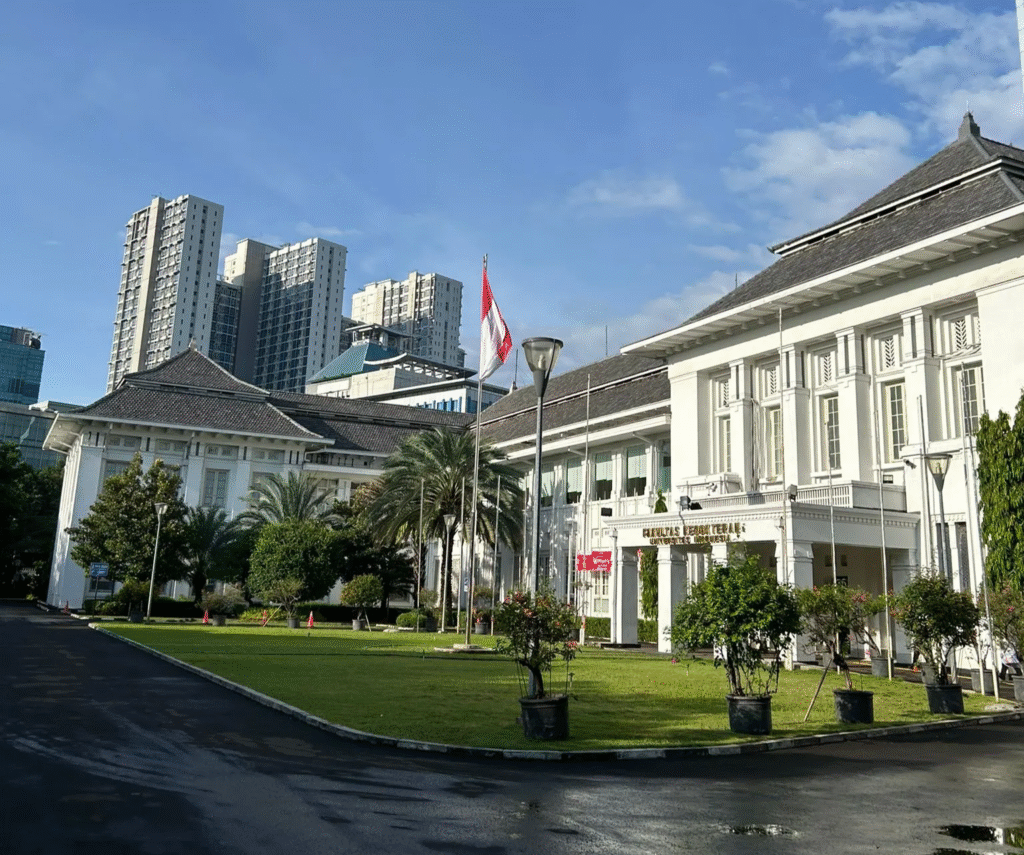
Indonesia has a history of colonialism lasting over 300 years, starting in the 17th century by the Dutch East India Company. Jakarta retains semblance of this occupation, with parts of the city showcasing Dutch colonial architecture. Indonesia was declared independent on the 17th August 1945, and Independence Day is celebrated annually by the Indonesian people.
🏥 The Healthcare System in Indonesia
Indonesia’s healthcare system is a mix of public and private services. There are significant socioeconomic and geographical inequalities, with more specialised areas of medicine and surgery practiced in Jakarta and other major cities.
This disparity means that for many Indonesians it is necessary to travel across the country and often from another island to access healthcare. People may be reluctant to make these journeys due to the distance away from home and the time it will take out of their work to do so. Consequently, many cases of disease are already at severe stages before they are treated.
I was also curious to learn about life as a doctor in Indonesia, and how this compares to my own experience in the NHS. Like within the NHS, Indonesian trainee doctors, the equivalent of UK resident doctors, form the backbone of the public healthcare sector, and do most of the ground-work. However, unlike NHS trainees, in Indonesia doctors are not paid during specialty training, which changes only when they reach the equivalent expertise of a consultant. This makes being a doctor expensive, and therefore a profession pursued exclusively by the wealthy, who are supported by family money during their training.
In addition to the financial burden, specialty training is intense in Indonesia, and shift patterns, particularly in surgery, are rigorous. Surgical trainees work in 24 hour shifts, starting in the morning of the first day, and ending the following morning. Often these extend longer if handovers involve complex cases.
Once doctors reach consultancy level, working hours decrease, and they become among the highest-paid professionals in the country.
🗓️ A Day in the Life
🌅Starting the Day
In Jakarta, the day starts early and finishes late. By 5am the food markets are already open in the streets surrounding the hospital, and most healthcare staff have started work by 6 or 7am. The start of my day varied: some days I was asked to be in the hospital by 7:30am, other days I would start at 9am. It took 10 minutes to walk to the hospital from our accommodation.
I also finished at different times each day depending on the opportunities and patient cases that I would be following. Some workdays would finish in the early afternoon, other days went on until the late evening. I did not mind this inconsistency, as it meant that I could stay for cases I was interested in, or take time off to explore the rest of Jakarta if there was not a role for me in the hospital that day.
🧠In the Operating Theatre
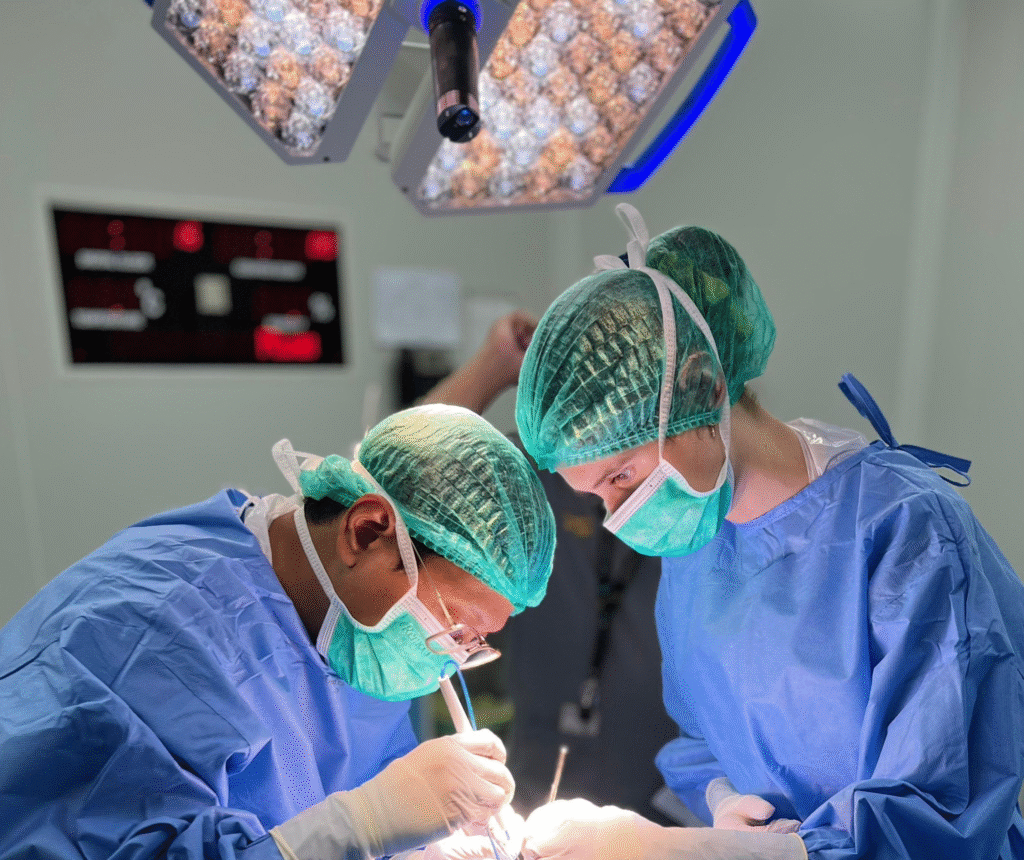
As I have an interest in surgery, I chose to do surgical rotations during my elective. I spent a week on neurosurgery, a week on paediatric surgery, and a week on general surgery, the latter of which included days on vascular surgery, plastic surgery, and maxillofacial surgery. I spent my fourth and final week on emergency medicine and anaesthetics.
Some people choose to do just one specialty on their elective, but I enjoyed the variation of experiencing multiple specialities. I particularly enjoyed plastic surgery and maxillofacial surgery as I was given the opportunity to scrub-in on some particularly complex cases. The best days of the elective were those that I was able to be hands-on and contribute in a meaningful way to the cases.
🍜Lunch-time
We would break for lunch usually around 12 noon or 1pm, though this would be later if there was a long surgery. The hospital complex included multiple cafes, restaurants and food stalls selling traditional Indonesian food. Most days we ate nasi goreng, which is a spicy fried rice dish. On days when the patient list was short and the surgeries weren’t complex, the team of doctors would eat together at one of these local cafes. They took the medical student with them, and they introduced us to their favourite Indonesian dishes.
🌆Evening Exploration
In the late afternoon and evening we were free to explore the city. I had travelled with one other friend, and we took the opportunity together to visit notable areas, including monuments, museums, and restaurants around the city. At the centre of Jakarta the National Monument stands in Merdeka Square. Merdeka means freedom, and the monument was built in acknowledgement of Indonesia’s struggle for independence, making it a significant political and cultural landmark.
Kota Tua, translating to ‘Old Town’, is another area of Jakarta that should not be missed. The neighborhood is still built in the old Dutch-style of Indonesia’s colonial past, with characteristic European architecture and a cobble-stone plaza. Jakarta is also known for having multiple enormous malls, which contain a seemingly infinite number of shops, from clothes outlets to electronics stores, as well as floors dedicated to supermarkets, restaurants, bars, and dessert parlours.
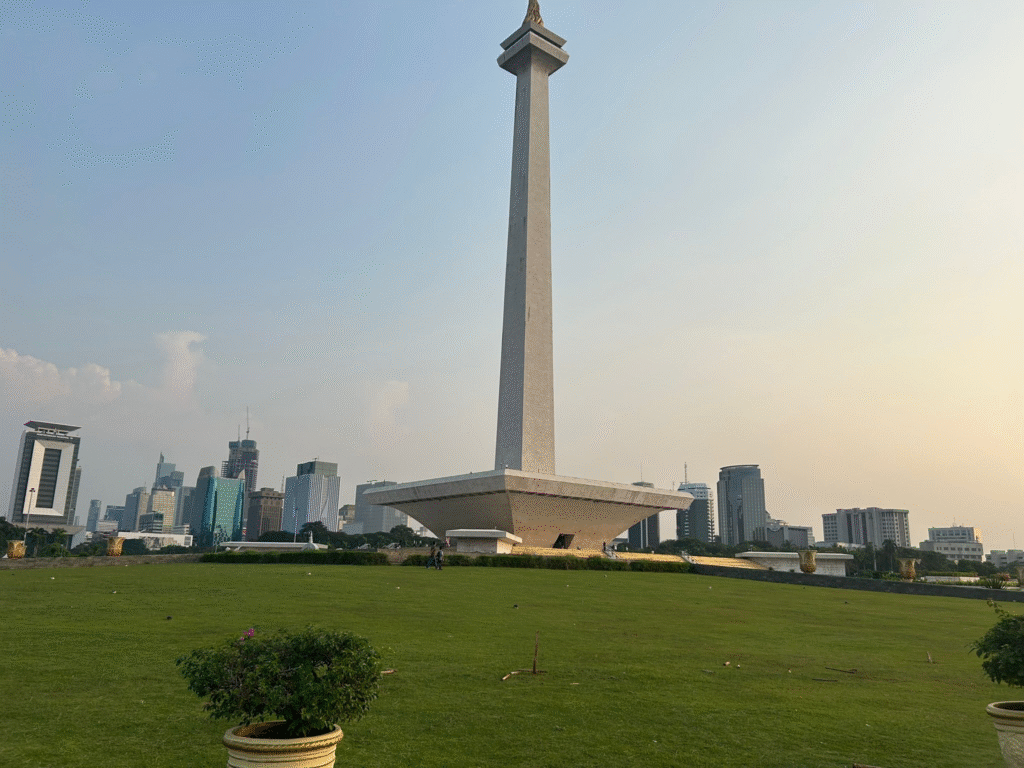
National Monument, Merdeka square
🌦️ Obstacles and Opportunities
🌧️Obstacles
- Language barriers: Bahasa Indonesian is the language spoken in Jakarta. Many doctors also spoke English, but most of the patients didn’t. This made it more difficult to follow ward rounds and clinics. However, the doctors were aware of the barrier, and usually helpful in explaining the context of each case.
- Time difference: The difference in time did mean that jet-lag was inevitable for the first few days we spent in Jakarta, and it took some time getting used to!
- Unfamiliar food: The food eaten in Jakarta is mostly based around spicy rice and spicy noodles. We tried some delicious dishes, but there is also a lot of street food, which we avoided as it is not recommended for travellers.
☀️Opportunities
- Hands-on: Scrubbing-in on surgical cases was the best part of the placement. I made the most of the opportunity to get practically involved with procedures, and I learned a lot from this experience.
- People: The doctors I was working with were all incredibly friendly, welcoming, and helpful. I enjoyed discussing the patient cases with them, and finding similarities and differences between healthcare and culture in the UK versus Indonesia.
- Cost-of-living: Indonesia is very cheap in comparison to the UK, which makes for a welcome change. We could enjoy the luxuries of taking taxis and eating out at a very lost cost.
✈️ Leaving Jakarta
🪷Java Island
Each weekend, we left Jakarta and travelled by overnight train to another city on Java island. We travelled to Bandung, where we took moped scooters through tea plantations and jungle, and to Yogyakarta, where we explored ancient temples.
🏝️Bali Island
After the placement, we left Java and flew to Bali island. Here we stayed in the jungle for a few days before my friend and I parted ways. He travelled to Sumatra, another Indonesian island north of Java, and I stayed in Bali but moved to a town called Ubud.
Bali has a reputation for being a paradise island. There are areas of Bali that live up to this name: the jungle, the waterfalls, the rice plantations, and some of the beaches are extraordinarily picturesque. However there is a side to Bali that is not well represented in the media: the bustling city, the standstill traffic, the overcrowded coastline.
The main difference between Java island and Bali comes down to the huge number of tourists in Bali, and how this has impacted the economy, culture, and natural landscape of the island.
🇻🇳Vietnam
The countries in South-East Asia are well connected by plane, train, or coach. From Bali, I flew via Ho Chi Minh City to Da Nang and on to Hoi An. Hoi An is a beautiful town, with brightly coloured buildings covered in cherry blossom, lanterns hung over every street, and colourful markets. It is famous for colourful lantern displays on the river at night, and coconut basket boats.
🇲🇾Malaysia
Finally, I travelled to Malaysia, where I visited Georgetown, Penang, and then went on to stay in Kuala Lumpur. Malaysia is similar in language, food, and culture to Indonesia, but there are differences too. Kuala Lumpur is diverse, with a population made up of Malay, Chinese, Indian, and other ethnic groups. The languages, food, culture and religion are a representation of this diversity. The infrastructure is tall, and the city is renowned for rooftop bars, restaurants, and swimming pools.
From Kuala Lumpur, I took a direct flight back to London.
💭 Final Thoughts
I thoroughly enjoyed my elective. I loved going to South-East Asia and being immersed in a new environment, learning about the culture and people, and practicing medicine and surgery in a setting I would never otherwise have the opportunity to experience.
I would recommend South-East Asia to any medical student who would like to go abroad, and wishes to continue to explore neighbouring cities and countries beyond the end of their elective placement.
I am so grateful for the experience, and for everything I have learned about Indonesia and healthcare during the time I was there.
📚Resources
- Read our Ultimate Guide on Planning Your Medical Elective here!
- Faculty of Medicine, University of Indonesia (FKUI) website
- A Brief History of Indonesia. Sultans, Spices, and Tsunamis: The Incredible Story of SouthEast Asia’s Largest Nation, by Tim Hannigan
- The Book of Jakarta, A City In Short Fiction, edited by Maesy Ang & Teddy W. Kusuma