
Planning an elective can be time-consuming and confusing, especially when there is varied support from medical schools, and you are balancing the time-taken to plan your elective with placements and various other commitments. But, planning your medical elective doesn’t have to be overwhelming and difficult!
This article provides you with an easy-to-follow step-by-step guide to your elective, with everything from choosing your destination, to finally arriving, and all the paperwork that comes in between. Read on to find out more!
An Introduction to Your Elective
The medical elective placement is a compulsory component of the UK medical school curriculum that gives medical students the opportunity to get hands-on experience in their specialty of interest.
Depending on the medical school, an elective placement may be 4 – 12 weeks long, and typically takes place in the fourth or fifth year. The placement can be anywhere in the world. Some medical students choose a placement in the UK, and others get in contact with hospitals abroad.

 Step 1: Start to Plan
When to start planning
We recommend that you start to plan your elective about 9 months in advance. So for example, if your elective takes place in July, you should start to make plans in October the year before.
How to start planning
To start planning your elective, you are going to need the following information that is specific to your medical school:
 Elective dates – Exact start and end dates
Duration – How many weeks
Funding available – What your medical school provides and how you apply
Key deadlines – Proposal submissions, risk assessments, approval forms
Elective handbook – Download and read thoroughly
Asking for help 
Asking your fellow medical students: Electives are a compulsory component of the UK medical school curriculum. This therefore means that there are hundreds of older-year medical students who have already done an elective! These are people with first-hand experience of the process that you are going through and therefore a fantastic point of contact for help and advice on where and how to apply.
Ask your medical school: Your medical school will most likely have dedicated staff for helping you with the elective process. We advise that you find out who these people are and how to contact them early on, and get in touch if you are unsure about any part of the process.
A Pre-Elective Elective
As planning an elective can be a confusing and complicated process, you may want to think about planning and partaking in a mini-elective before your ‘official’ elective. Though this is uncommon, it may be extremely helpful to have had prior experience to guide the planning process.
You might want to do this mini-elective during one of your university breaks a year or two before the official elective dates. It could be just a week or two long, and at a destination close to home, and will give you a feel of what to expect, and the opportunity to make any improvements to your planning process or to the placement experience itself.
 Step 2: Choose a Destination
The world is your oyster – The fantastic thing about the medical elective placement is that you can travel anywhere in the world – the possibilities are endless! However, in order to keep your decision fatigue under control, here are some questions to help you determine your destination:

 Question 1: What is your budget?
This is going to be a big part of many of the decisions you make when it comes to your elective, so be sure to consider the financial aspect early on. Electives range from £250 (UK-based) to £5,000+ (distant locations with travel companies). Approximate budget:
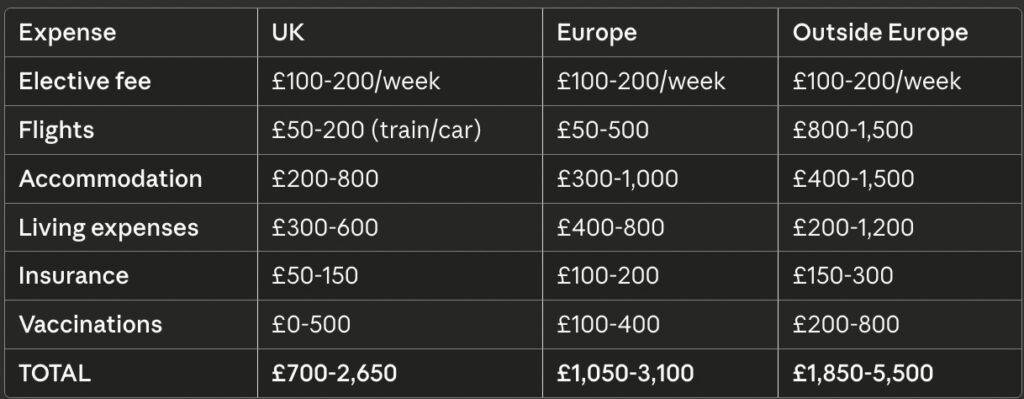
Now it is time to start thinking about additional expenses that you will have to fund yourself.
Consider the following expenditures:
-
- The elective fee paid to the hospital: This can vary hugely, with developed countries more likely to be more expensive. Expect to pay around £100-200 per week, but this can widely vary.
-
- Flights: This expense applies to those doing their elective abroad, and can in many cases be the most expensive aspect of the trip. Expect to pay £50-500 for return flights to Europe, and £800-1500 for return flights outside of Europe. For those travelling within the UK, consider the expense of travelling to your elective, whether this be via train or car.
-
- Accommodation: Many students choose to travel to destinations across the UK or abroad where they already having family, friends or other contacts whom they can stay with. Other students stay in accommodation provided by the hospital. Additional options include Airbnb, home-stays, or hotels.
-
- Living expenses: In low-income countries, living expenses will feel affordable for a student coming from the UK. However, in high-income countries, the necessities of daily life may prove extremely expensive, and is an important consideration to take before travelling.
 See step 4 for information on bursaries and grants available to help in funding your elective.
 Question 2: Which specialties are you interested in?
One of the main purposes of the medical elective placement is to give students the opportunity to gain experience in a specialty of their choice. Usually students work in one or two specialties during their elective, but if you have interest in multiple specialities, it may be possible to rotate in more.
Choose 1-2 specialties based on:
-
- Career goals – Specialties you’re considering for your future
-
- Experience – Specialties you haven’t experienced yet at medical school
-
- Unique opportunities – Tropical medicine, rural surgery, etc.
Your specialty choice may determine your destination, as some hospitals specialise in particular fields. Consider the specialty(s) that you would like to experience during your elective, and then ask yourself our next question prompt…
 Question 3: What Type of Healthcare Setting?
High-income countries vs Low-income countries:
HICs, such as the UK, the US, Canada, Australia, New Zealand, Japan, and much of Europe, may have an abundance of staff, medications and equipment, and make use of the most up-to-date research findings and technology.
LICs such as many parts of South America and Africa may provide valuable understanding of the practice of medicine and surgery when resources are more limited.
Urban locations vs Rural locations:
City and district hospitals differ in the services that may be offered, and medical conditions that may be seen.
City hospitals are more likely to be busy tertiary centres with a huge variety of clinical cases, while rural hospitals may be more orientated towards smaller community and provide primary or secondary care.
Language & Culture:
- Some students may choose to travel to a country where they speak the language or wish to learn it. Although this is not the main focus of the elective placement, it can be an added benefit.
- When travelling to countries where you do not speak the national language(s), consider that there may be a language barrier when it comes to conversing with staff or patients.
Check your medical school’s elective handbook (every UK medical school has specific rules)
 Question 4: DIY or travel company?
There are a number of travel companies that provide an all-inclusive service to help students plan their medical elective placement.
Pro’s
-
- The main benefit of travelling with an elective travel company is that they take on the responsibility of organising accommodation, food, and placement activities, saving you time.
-
- They also usually have multiple students using their services, so the experience is sociable and an opportunity to meet new people.
Con’s
-
- These companies are usually expensive
-
- You may have less autonomy over how you spend your time on your elective.
The following travel companies provide a variety of services and pricing for medical electives:
 Question 5: With Friends or Make Friends?
Now that you have considered your budget and destination, you might want to consider whether you are going on your elective alone, or with people that you know.
If you would like to do with a friend or two, you can use your answers to the above questions to consider whether your elective ideas are compatible with your potential travel-buddies.
Going with friends can be an opportunity to go on an adventure together, establishing a closer friendship and making memories.
Equally, going on your elective alone is an opportunity to make new friends and learn about yourself along the way.
| With Friends | Make Friends | |
| Pros | Establish a closer friendship through shared experiences. | 1. Make friends with students from other medical schools 2. Partaking in experiences alone can build confidence and teach you about yourself. |
| Cons | 1. Potential for fall-outs when spending a prolonged intense period together. 2. Less likely to make new friends. |
1. Potential to feel lonely without familiar people around. 2. Figuring out all the travel and logistics by yourself. |
 Step 3: Apply to a Placement
Now that you have a better idea of where you might want to do your elective placement, it is time to apply. This step depends on your answers to the questions in step 2.
If Using a Travel Company:
Follow application instructions on their website. Most require a deposit and have rolling admissions.
If Self Organising:
Most students choose to organise their elective themselves, without the help of one of these companies, in which case you need to get in touch with a hospital or a consultant who is happy to supervise you during your elective period.
Option A – Contact the Hospital:
-
- Look for “medical electives” or “undergraduate education” pages on hospital websites
-
- Email the undergraduate/education centre
-
- Use general hospital enquiries if no specific email exists
Option B – Contact Individual Consultants:
-
- Find consultant profiles on hospital websites
-
- Use LinkedIn for professional networking
-
- Be professional and personalised in your approach
We have provided a template email below that you may like to use to help you.
We recommend getting in contact with more than one hospital/consultant, as often cold-emails may be missed or ignored.
 Step 4: Arrange Funding
Funding can be a big factor in choosing where to go for your elective. Between flights, insurance, vaccinations and costs of daily living electives can range from £250 to £5000. Most students fund their electives through savings, part time work, family support and grants. This section will help you create a realistic funding strategy.

Hidden costs that people forget about:
-
- Getting to and from the airport/transfers
-
- Baggage fees
-
- Phone/data plans
-
- Laundry
-
- Professional clothing
-
- Gifts for hosts
- Emergency fund
Bursaries and Grants
Many grants go unawarded because students don’t apply so it is worth doing your research. Some organisations have compiled a list of elective bursaries available for medical students to apply to. These are often speciality based and it is worth applying early.
Medical Schools Council: Elective bursaries
RMBF: Elective bursaries and grants
Turing Scheme
Some universities take part in the Turing scheme which has replaced ERASMUS+. The Turing Scheme is the UK government’s funding programme for students to carry out approved study, work or volunteer placements anywhere in the world, with an institution or organisation. If your university offers this, then you could be eligible for upto £19 per day.
NHS Bursary
If you are in year 5 or above you may be eligible to claim expenses. The NHS Bursary itself does not fund electives, but eligible students can apply for Travel and Dual Accommodation Expenses (TDAE) to cover costs associated with an elective placement. Students can claim for travel between temporary accommodation and the placement site, and accommodation costs up to a certain rate per night after the placement is completed.
Start Early: The Savings Strategy
Saving money little and often can go a long way. Saving £100/month over 12 months is 1,200 – enough to cover an elective in Europe.
Savings Tips:
-
- Open a dedicated elective savings account
-
- Set up automatic transfers
-
- Use savings apps that round up purchases
-
- Cut one subscription service and redirect the money
-
- Take on extra shifts during holidays
Remember: Even small amounts add up. £50/month over a year is £600
 Step 5: Understand the Requirements
Understanding the requirements you must meet for your elective to proceed is crucial. You don’t want to miss out because you forget a deadline. Requirements can come from: medical school rules, professional requirements, insurance and the host institution’s prerequisites. It is better to start this research early – universities will usually want you to do this around 6-12 months in advance. This section will help you understand what you need to get sorted before your elective.
Your Medical School Requirements
All medical schools will have varying requirements so it is best to check your elective handbook in order to know what you need to submit and when. Common Requirements include:
Elective proposal form
This may be done in stages. For example stage 1 may include evidence of acceptance from your host and then once the University has approved of your placement, you can get everything booked. At a later point, stage 2 may involve a risk assessment and travel documents to be checked over by the university.
Insurance
This is detailed in a section below but your medical school will usually require proof of insurance.
Risk Assessment
The risk assessment may seem tedious to fill out but it may come in handy in an emergency (and remember to say that you would inform the medical school in case of all scenarios)! It may include things like:
-
- Details of the embassy in your host country
-
- Local Medical Service available for foreigners/elective students. Linked here is a worldwide list of medical facilities
-
- Country specific travel advice. This can be found on the Foreign and Commonwealth Office (FCO) website. Usually, if you request a country specifically identified by the FCO as ‘advise against travelling to’ you will not be allowed to go. It is important to remember that FCO advise changes a lot so if the situation changes, your university may be able to retract their approval
-
- Contingency plan for loss of passport/visa/travel documents
-
- Plan for who to contact if detained by immigration, police or the military
-
- Plan for if you become unwell: After Brexit, the European Health Insurance Card (EHIC) was replaced by the Global Health Insurance Card (GHIC). The GHIC allows UK nationals get state healthcare in EU countries and Switzerland. If your EHIC expires, you will need to get a GHIC here
-
- And planning for other risks like needle-stick injuries, being bitten by animals, psychological distress, loss of possessions etc.
Reflective piece
Often, students are tasked with doing a post elective write up to reflect on their experiences. We have further details on this in our Step 9: After Your Elective.
GMC and Professional Requirements
When abroad, it can be difficult to have conversations of expectations with supervisors. It is really important to recognise the limitations of your competence and ensure you are not doing anything you are not trained to do.
GMC: Good medical practice for medical students
MDU: Working within your competence as a medical student
It is also important to think about the ethical implications of your elective. Here are a few to consider:
-
- Informed consent (especially important where language barriers exist)
-
- Cultural sensitivity (for example covering heads)
-
- Understanding power dynamics in healthcare globally (not just viewing western medicine as superior)
Host Institution Requirements
Every hospital/ organisation has its own requirements:
Common Requirements:
-
- Letter of Recommendation – Official documentation from your University
-
- Professional references – Usually 1-2 academic references
-
- Criminal record check (DBS/police check) – Some countries require this if working with vulnerable people
-
- Proof of vaccinations – Specific requirements vary depending on destination
-
- CV – Often required
-
- Academic Transcript – detailing your recent results
-
- Personal statement – Explaining your interest and learning goals
-
- Language proficiency – Some institutions require proof of language skills
-
- Registration – Proof you’re a legitimate medical student
 Step 6: Health and Safety Preparation

Your personal safety on your elective is really important. Some people get really stressed, especially going abroad and others are more chill about it but at the end of the day, while most medical electives are completed without incident, being prepared and aware significantly reduces risk. This section will cover everything from vaccinations and travel health to personal security and emergency planning. The goal isn’t to scare you, but to give you the knowledge and tools to stay safe so you can focus on having fun!
Health Consultations
It is best to book these at least 8-12 weeks before departure with your GP or pharmacist. Some vaccines require multiple doses spread over weeks or months so make sure to do your research. NHS travel clinics offer free advice and some free vaccines, though many vaccinations are quite costly. Private travel clinics are alternatives to NHS appointments.
Remember to take details about:
-
- Destination
-
- Accommodation Type
-
- Planned activities
-
- Duration of Stay
Vaccination 101
The vaccines you need depend entirely on your destination and what you’ll be doing. Make sure to keep all vaccination certificates together and carry both physical and digital copies during your elective as some vaccinations such as yellow fever may need to be shown to immigration officials in countries where it is endemic.
A useful website for finding out what vaccinations you may need is: The National Travel Health Network and Centre (NaTHNaC)
The NHS also provides good advice: Travel vaccination advice
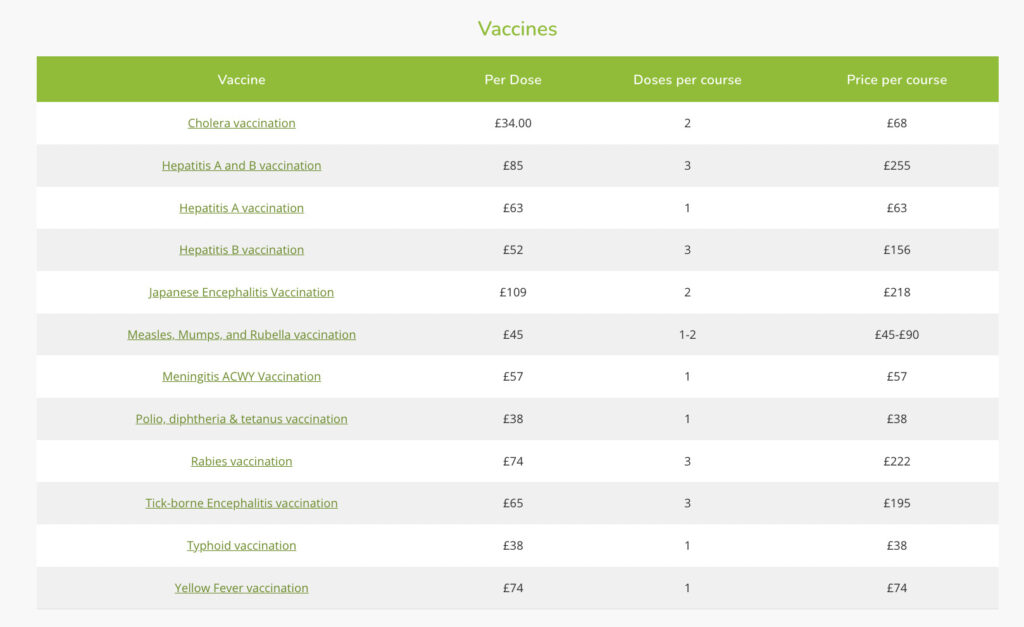
The following vaccinations are free if from your local GP surgery (you must contact them well in advance as slots are often limited):
-
- polio
-
- typhoid
-
- Hepatitis A
-
- Cholera
You’ll have to pay for travel vaccinations against:
-
- TB
-
- Yellow fever
-
- Rabies
-
- Hepatitis B
-
- Meningitis
-
- Japenese Encephalitis
-
- Tick-borbe Encephalitis
Antimalarials
It is important to seek advice regarding malaria prophylaxis before you depart as different countries have different requirements for example, chloroquine resistance is common in some areas so taking the medication would be ineffective.
ABCD of Malaria Prevention:
Awareness of risk
Check if your destination is malaria-endemic
Bite Prevention
-
- Wear long sleeves and trousers (especially dusk/dawn)
-
- Use DEET-containing repellent (50%+)
-
- Sleep under mosquito nets
-
- Use insecticide-treated clothing
Chemoprophylaxis
Common options include:
-
- Atovaquone-proguanil (Malarone – expensive but well-tolerated, taken daily)
-
- Doxycycline (cheap, daily dosing, can cause photosensitivity and should be avoided in pregnancy)
-
- Mefloquine (Lariam – weekly dosing but contraindicated in certain psychiatric conditions).
Start antimalarials before travel as directed, take them consistently throughout your stay, and crucially, continue for the full course after you return home.
Top tip: Remember to take your tablets as missing a dose will increase your risk of malaria – you could even set an alarm on your phone
Diagnosis
-
- Seek urgent help if you become unwell.
-
- If you get symptoms while away (usually similar to flu) then seek medical advice immediately.
-
- Check out the NHS website for more information on Malaria here
If you used to live in a malaria endemic area it is still really important that you take precautions as you lose immunity quickly after leaving.
Taking a Medical Kit
It can be useful to take a medical kit for illnesses that you can treat yourself as you may not have easy access to a chemist. A medical kit may include:
-
- any personal prescription medications with enough for your entire stay plus extra in case of delays
-
- basic first aid supplies like plasters, bandages, and antiseptic
-
- painkillers and anti-inflammatories
-
- antihistamines for allergic reactions
-
- oral rehydration salts and loperamide for diarrhoea
-
- a course of antibiotics for traveler’s diarrhoea if your GP prescribes them
-
- water purification tablets
-
- a thermometer
Keep medications in their original packaging with prescription labels to avoid customs issues. Carry essential medications in your hand luggage in case checked bags go missing.
Food and Water Safety
Nobody wants food poisoning on their elective so stick to these rules below to avoid getting ill:
-
- drinking only bottled or purified water
-
- avoid ice cubes
-
- avoid raw or undercooked food
-
- eat freshly cooked hot meals
-
- avoid salads and unpeeled fruits unless you can peel them yourself
-
- be cautious with street food
If you do get ill, try to stay hydrated with oral rehydration solutions, rest, and seek medical attention if there’s blood in your stools, high fever, or symptoms lasting more than a few days. Most cases resolve within 48-72 hours.
Sexual Health
If you think you may be sexually active during your elective, pack condoms from home as quality may be variable abroad. HIV and other sexually transmitted infection rates may be significantly higher than in the UK depending on your destination.
HIV and other blood-borne viruses
HIV and other blood-borne viruses may be significantly more prevalent in the country you’re visiting than at home and infection control procedures may be poor in some countries.
Medical schools will often have specific guidance for HIV prophylaxis but you should consider:
-
- taking an adequate supply of gloves, masks and eye protection
-
- finding out if your host institution has post-exposure prophylaxis (PEP)
If you experience any potential exposure to HIV through a needle injury or sexual contact, seek immediate medical attention for PEP, which must be started within 72 hours.
Accommodation Safety
Choose carefully:
-
- Arrange safe airport transfer
-
- Read recent reviews and ensure safe area
-
- Check secure locks and safe for valuables
Daily Safety
-
- Stay aware of surroundings (especially crowded areas)
-
- Use money belt or hidden pouch for passport, cash, cards and only carry what you need
-
- Avoid displaying expensive items
-
- Learn basic local phrases: “help,” “no,” “leave me alone” and learn emergency numbers
Alcohol and Substance Safety
Drink spiking prevention:
-
- Never leave drinks unattended
-
- Don’t accept drinks from strangers
-
- Watch drinks being poured
Important:
-
- You’re representing your medical school
-
- Alcohol tolerance affected by heat, dehydration, altitude
-
- Never use illegal drugs abroad (severe penalties, loss of medical school place, GMC issues)
Women’s Safety
-
- Research cultural norms around dress and behaviour
-
- Consider fake wedding ring when traveling alone
-
- In some cultures, eye contact/smiling may be misinterpreted
-
- Walk with confidence
-
- Avoid sharing personal information with strangers
LGBTQ+ Safety
-
- Research LGBTQ+ rights carefully (some countries criminalise same-sex relationships)
-
- Check FCDO website for country-specific information
-
- Consider safety vs openness about orientation/identity
Keep a printed copy of emergency contacts separate to your phone
Being prepared doesn’t mean being paranoid – it means being informed, aware, and ready to handle challenges. Most medical students complete their electives safely and have a problem free experience. Follow these guidelines, trust your instincts, and seek help when needed.
 Step 7: Get Insurance (and a Visa)
Insurance can sometimes seem really complicated but it is important that you get the right cover.
Medical Indemnity – This is Essential
Medical indemnity offers cover for clinical negligence claims if something goes wrong during clinical activities.
This is not covered by travel insurance
You can get free cover from:
-
- The Medical Defence Union
-
- Medical Protection
It is really important that when on your elective you always practice within your limits and ensure that no patients come to harm.
Travel Insurance
-
- Medical schools will usually give you insurance cover but you may also require extra travel insurance. Money supermarket can offer good comparisons to help you get the cheapest option.
-
- Some good providers for electives are:
-
- Lloyd White: (BMA member discount)
-
- Some good providers for electives are:
Ensure to keep a copy of your insurance details with you when you go away and make sure someone at home has the details too.
Things to consider include:
-
- Flight delays and cancellations
-
- Compensation for cancelling due to resits
-
- Loss of money, possessions or passport
-
- Loss of portable medical equipment such as a stethoscope
-
- Treatment for things like needle stick injuries
-
- Medical expenses for if you fall ill
-
- Cover for any extreme sports
-
- Declare all pre-existing conditions, including mental health conditions
Country Specific Legal Requirements – Visas
Your host institution should help you with selecting the correct visa for you destination country. These usually cost money and give you permission to stay in a country for a certain period of time. It is important to find out if you need a tourist or student visa as some countries specifically prohibit clinical activities on tourist visas.
 Step 8: Make the Most of Your Elective
Your elective is a chance to learn in a new environment, challenge your assumptions about healthcare, develop clinical skills and grow both professionally and personally. This transformation doesn’t happen overnight though! You need to be intentional with your learning and reflect on what you see.
Set Learning Objectives
Before you leave, think about some SMART goals (Specific, Measurable, Achievable, Relevant, Time-bound)
Example Poor Objectives:
-
- “Learn about tropical medicine”
-
- “Improve clinical skills”
-
- “Experience different healthcare”
Here are some SMARTer goals:
-
- Systems: ‘Compare the healthcare delivery model, funding, and patient access between NHS and the host country system’
-
- Clinical Skills: ‘Observe and practice taking histories in at least 20 patient encounters, reflecting on communication challenges’
-
- Knowledge: ‘Understand the presentation, diagnosis, and management of malaria, dengue fever, and tuberculosis by reviewing at least 10 relevant clinical cases’
-
- Professional: ‘Shadow consultants in obstetrics to understand career pathways and training differences between UK and Tanzania’
-
- Cultural: ‘Learn about traditional medicine practices and how they interact with Western medicine in this setting’
Tip: Share your objectives with your supervisor on your first day as it will help them to tailor your experience.
 Embrace Cultural Differences
-
- It is important to remember that you are not there to be a saviour, you are a guest.
-
- Limited resources often inspire creative solutions you won’t see in the NHS.
-
- Try to listen to the experiences of healthcare workers and ask questions with genuine curiosity rather than judgement.
-
- It is also important to recognise that concepts like informed consent, patient autonomy, and professional boundaries may be understood differently across cultures so remember to respect these differences while maintaining your own professional standards.
-
- Be mindful of hierarchies, gender dynamics, and social customs that may differ from the UK.
-
- Learn basic greetings in the local language, dress appropriately (often more conservatively than in the UK), and observe how staff interact with patients before jumping in.
-
- Always ask permission before examining patients, particularly regarding modesty and gender considerations.
 Network
Connections can go a long way – you never know what collaborations they may lead to! Make sure you send thoughtful thank you emails within a week of leaving, share appropriate photos, and follow through on any commitments you make.
 Document Your Experience
This shouldn’t feel like a chore – just 5 minutes a day to capture insights and help you in future with writing up elective reports. It may also be useful to try and save any feedback you get from supervisors as it will be useful for your portfolio.
 Work hard, play hard, and maybe go travelling!
The elective placement is an educational experience; an opportunity for you to learn more about a chosen specialty, and to experience the hospital environment perhaps in an area of the UK you have not been to, or even in another country across the world!
You will be spending the majority of each day in the hospital so that you can familiarise yourself with the environment and fully come to appreciate what it means to be a doctor in your chosen specialty and location. However, there will also be time, typically in the evening and at weekends, to explore the local area outside the hospital walls. This can provide you with knowledge of the wider socioeconomic and cultural contexts of patients and doctors that you have interacted with inside the hospital, especially if you are doing your elective in an unfamiliar country. It can also just be fun to use your free time to explore tourist attractions and socialise with people you have met.
Many students who do their elective abroad take the opportunity to stay and travel in that part of the world once their elective dates have finished for a few weeks post-elective.
Final Thoughts Before You Go
Your elective is what you make of it. Some people treat it like a holiday, others treat it as a professional experience. The students who get the most value are those who approach it with clear objectives of what they want out of it, genuine curiosity and intentional reflection.
Be present, be respectful, be grateful, and be open to having your assumptions challenged. The clinical knowledge you gain is important, but the perspective shift, cultural competence, and professional relationships often prove even more valuable over the course of your career.

 Step 9: After Your Elective
After the elective placement, many medical schools ask their students to write reflective pieces on their experience. Reflecting on your elective is a useful way to consolidate what you have learned, and to look back at the goals you set yourself before you went, and consider whether you were able to meet these targets.
You may also wish to think about whether you feel suited to the specialities that you experienced during your elective, and allow this to shape your future career goals.
Top Tip: Start writing your reflection soon after you return from your elective so that you have all the key events and experiences fresh in your memory.
Downloadable Checklist
Elective Planning Checklist.pdf
 Timeline
 FAQs
FAQs
FAQs
Q: When should I start planning my elective?
A: Start 9 months before your elective date. This gives you time for applications, visas, vaccinations, and funding.
Q: How much does a medical elective cost?
A: £250-£5,000 depending on destination and whether you use a travel company. UK electives are cheapest; distant locations with travel companies are most expensive.
Q: Can I do my elective in the UK?
A: Yes! Many students choose UK placements. They’re cheaper, no visa needed, and offer valuable NHS experience in different regions.
Q: Do I need medical indemnity insurance?
A: Yes, it’s essential and separate from travel insurance. Get free cover from MDU or Medical Protection.
Q: What if I don’t speak the local language?
A: Many hospitals have English-speaking staff. Consider this when choosing your destination, but language barriers can also be valuable learning experiences.
Q: Can I get funding for my elective?
A: Yes! Options include medical school funding, Turing Scheme, NHS TDAE (year 5+), and specialty-specific bursaries. Many grants go unawarded so always apply.
Q: What vaccinations do I need?
A: Depends on your destination. Book a travel health consultation 8-12 weeks before departure. Budget £200-800 for paid vaccines.
Q: Is it safe to do an elective abroad?
A: Yes, with proper preparation. Check FCDO travel advice, get appropriate insurance, take health precautions, and follow safety guidelines.
Q: Can I change my elective destination after approval?
A: Depends on your medical school’s policy. Major changes usually require re-approval. Contact your elective coordinator early if plans change.
Q: What should I do if I get ill during my elective?
A: Seek medical attention promptly, contact your insurance provider, and inform your medical school. Have emergency contacts readily available.
Q: Do I need a visa for my elective?
A: Depends on the country and duration. Many countries require student/medical elective visas. Tourist visas may prohibit clinical work. Your host institution should guide you.
Q: Can I do electives in multiple locations?
A: Possibly, check with your medical school and consider the logistics of travel between sites.
Q: What if my elective placement falls through?
A: Have backup options. Apply to multiple places initially. If cancellation happens late, contact your medical school immediately – they may have contingency arrangements.
Q: Should I use a travel company or organise it myself?
A: Most students self-organise (cheaper, more control). Travel companies suit those wanting less hassle and a social experience, but cost significantly more (£2,000-4,000+).
Thanks for reading. If you have any comments or suggestions, please feel free to share them below and we’ll get back to you as soon as we can!