As medical students, we are rarely exposed to the world beyond the hospital doors. Careers outside of medicine often seem out of reach; an unfamiliar territory. So, when the chance arose to speak with a doctor who had successfully transitioned to the corporate world, it was an opportunity that could not be missed!
Rasheeta Sivapackianathan, a former acute medicine clinician, who works in healthcare communications at Real Chemistry, kindly agreed to share her insights into medical communications.
🤔What is MedComms?
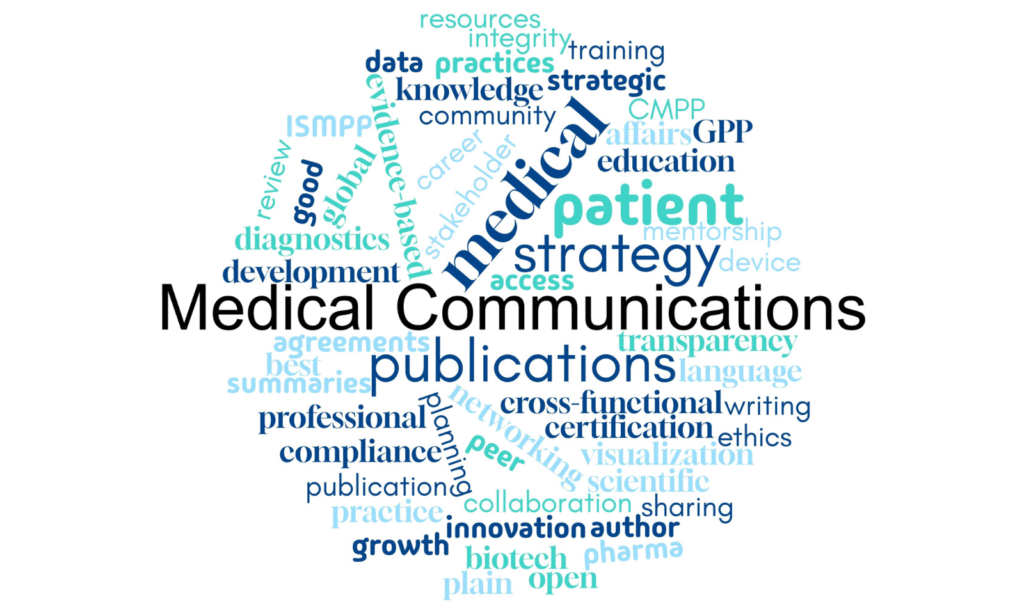
Medical communication (MedComms) blends science and commercial industry and aims to help pharmaceutical companies to promote their products to the public, and stakeholders such as doctors and scientists. In essence, medical communications is about making medical and scientific concepts more palatable for the lay public. It is closely linked to medical affairs, which is the bridge between industry and the medical community.

💡Who is RealChemistry?
Real Chemistry is a multinational company, who utilise AI alongside human expertise to provide a range of services to the top pharmaceutical and biotech companies. With capabilities spanning healthcare communications, advertising, data and analytics, Real Chemistry is focused on transforming the patient experience.
Rasheeta works as a Principal Medical Writer in the Medical Education department. She began her journey whilst doing her PhD in Molecular Biology, when she contacted a careers advisor to learn more about the pharmaceutical industry. And as they say, the rest is history.
We sat down with Rasheeta to find out more about MedComms and her day-to-day job.
🚀What jobs are there?
Within MedComms, there are a variety of different jobs available, all working together to help pharmaceutical companies broaden their influence. These jobs include:
Medical Writing: Creating written material for pharmaceutical companies, such as abstracts for medical journals, or producing information geared towards clinicians or even marketing content.
Regulatory Writing: Ensuring that the products created by the pharmaceutical companies have written information (i.e. safety advice) that complies with national regulations.
Medical Editing: Checking the accuracy of medical writing, proofreading, and editing.
Account Management: Focuses more on the business aspect of MedComms, and works closely with accounts (pharmaceutical companies) to ensure projects are completed on time and within budget.
This is a generic guide, and each company will have their own take on the roles listed above. For example, at Real Chemistry, employees may start as medical writers and then with experience progress to become a medical strategist.

🎬A day in the life

It’s difficult to understand a career without knowing what goes on day-to-day. Whilst Rasheeta disclosed that “there was no typical day”, she did give me some useful insights into the nitty gritty of MedComms.
Mornings: The day often begin with coffee and emails. Rasheeta often spends 15 minutes in the morning setting her agenda for the day, looking at her clients’ needs for that particular week.
Each morning also involves meetings, to regroup with the various members of the team, from the project manager to accounts and the writing team. Much like an MDT board round. During these meetings, they discuss progress on projects and catch up with each department.
This is either done in the office or virtually, as Real Chemistry support a flexible, hybrid work pattern. This means that staff get to spend some days working from home, and are also encouraged to go into the office about 2 days a week (in Rasheeta’s case, this would be in central London.)
Afternoons: This is where the day begins to deviate from a set timeline. Rasheeta and her team focus their attention to specific client projects. This dictates a lot of the tasks that need doing. For example, a typical piece of work could be developing training materials or supporting a publication for a client, and this workload is distributed amongst the team. As a Principal Medical Writer, Rasheeta oversees projects, and liaises with the client to ensure they meet the specifications of the task.
On some occasions, Rasheeta could be on site (out of office, and possibly even abroad) at a medical conference to support a client with a new product launch, gathering insights from the conference or disseminating information on a new clinical trial. During this time, there is a lot of interaction with the clients, and with the conference itself, trying to gain as many useful insights as possible to support the client’s strategic goal.
The team may cover a diverse range of therapy areas from oncology to liver disease to infectious diseases. Often it allows employees to be updated on novel areas of research and development, and to be present at the forefront of innovation.
🎯What skills are needed?
Through medical training, doctors develop many transferable skills, such as communicating with people (patients and colleagues), presenting skills (through ward rounds for example) and it’s important to draw on these. Other skills that will help include:
- An in-depth knowledge of science; often recruiters will ask for a high-level qualification in a STEM subject.
- Excellent writing skills.
- Understanding of research methods and how to analyse papers, including using statistics.
- Great teamworking skills, and ability to work to deadlines.
- Personable and can communicate with clients effectively.
🔍How to find a job in MedComms
Whilst speaking to Rasheeta, she gave some advice to those wanting to step into the world of MedComms.
Attend networking opportunities: Whilst at university, this can be sought out through the careers department. Often they will have careers fairs or talks to allow students to engage with companies such as Real Chemistry. As a doctor, this can seem a bit harder, however, much like the medical specialties each have (multiple) conference days, so does MedComms. For example, Medcomms Day 2025 took place on 25th June, so keep an eye out for next year!
Speak to careers advisors: Again, for university students, this is an easy one. A careers advisor is an invaluable resource. With their experience and large network, they can guide you through the process of searching for jobs that fit you and through the recruitment process too! If you have recently left university, it may be worth getting in contact with your university as an alumni to see what services you may still be eligible for.
Apply for internships: Internships can be found online, for example through LinkedIn or on websites of large MedComms companies. They often require early application and typically are for recent graduates. They are a brilliant way to gain exposure and experience in industry and an internship could even result in a permanent job!
Reach out to companies and people in the field: If there isn’t an internship to fit you, another option is to contact companies directly to simply gain more insight and build relationships with those in the field. This can be done through mutual connections, or online on LinkedIn. Who knows, this could even lead to your very own internship post! As the saying goes, if you don’t ask, you don’t get.
Prepare for the interview process: Often, the interview process takes place over several stages and can involve simulating the typical tasks you may do day-to-day. For example, you may be asked to read a scientific paper and present it to a lay audience. Having practice before the event can maximise your chances of getting it right on the day. Just with any exam, understand the structure, the typical questions and prep!
Develop your research and writing skills: Get involved in writing blogs, articles, and research papers. While on placement, speak to doctors about ongoing projects and ask if you can support their research or publications. Contributing to papers or presenting at conferences is a fantastic way to strengthen your communication skills and showcase your initiative.
📚Resources
- Real Chemistry: Events
- International society of Medical Publication Professionals: Provides events, conferences and resources related to med comms.
- Conference – EMWA: an annual conference held by the European Medical Writers Association
- Dice: Guide to medical communication
- Article: Medical Communications: The “Write” Career Path for You?
- European Medical Writers Association: EMWA Homepage
- Discover our opportunities: ‘Top Essay Writing Competitions for UK Medical Students’
- Interested in a Medical publishing internship? Discover this opportunity at ‘Magdalen Medical Publishing Internship’
A special thanks to Real Chemistry, in particular Shannon McIntee and Rasheeta Sivapackianathan for their help in creating this article!
Thanks for reading! If you have any comments or suggestions, please feel free to share them below and we’ll get back to you as soon as we can!