Histopathology is a speciality medical students have limited opportunities to explore during their time at medical school. The histopathology departments remain an unlikely place for students to find themselves attending for placement, and it is a specialty seldom offered in foundation programmes.
This article is for medical students and foundation doctors who may wish to know more about what histopathology is and how to explore opportunities to prepare your portfolio for a histopathology training application.
🔬 What is Histopathology?
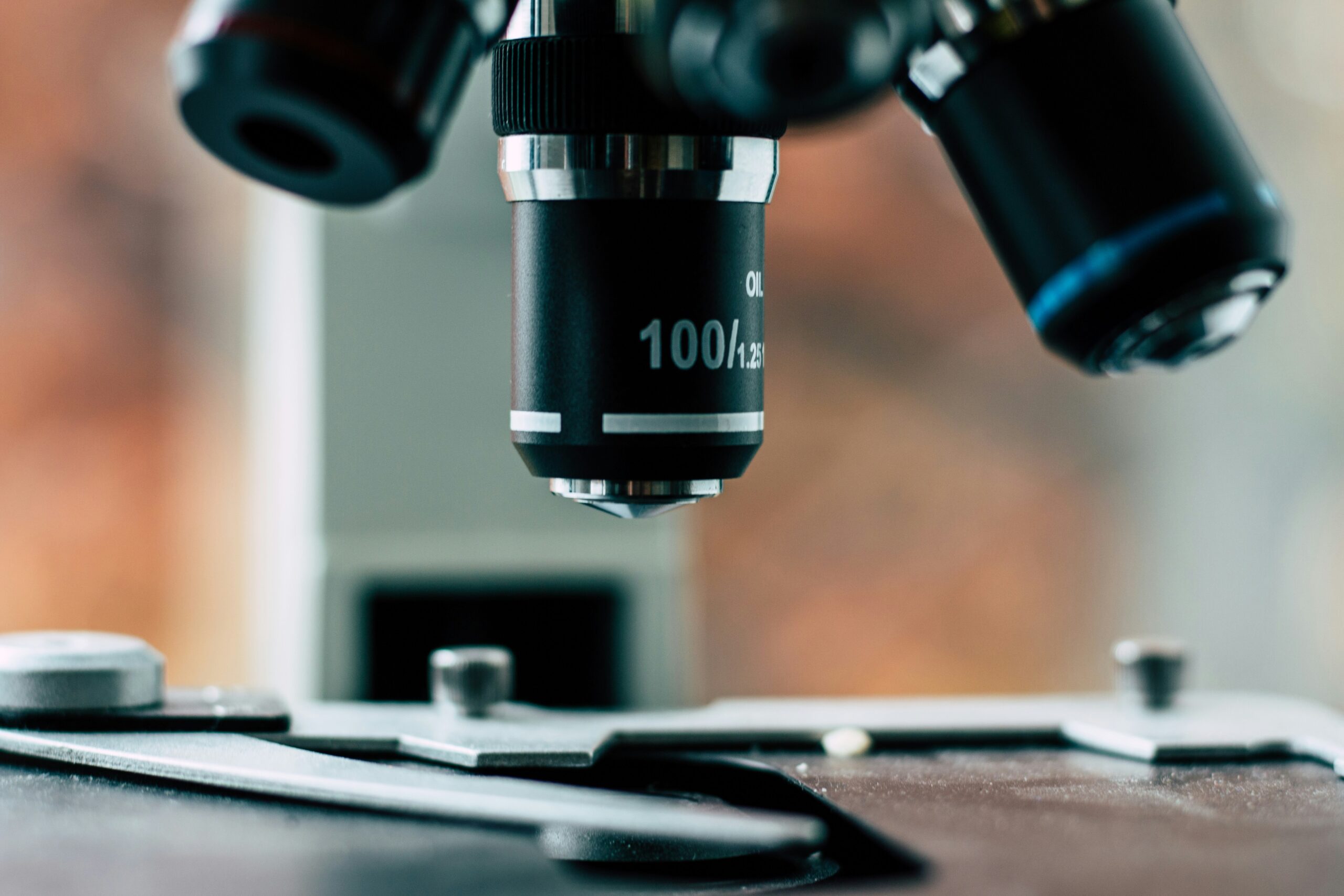
Histopathology is the study of diseases of the tissues by analysis under a microscope. This can involve tissue taken from surgical specimens and biopsies, which is then prepared into slides before it can be analysed – this can involve classic microscopes and digital technologies that allow for slides to be scanned and viewed on monitors.
Histopathology covers all areas of the body and involves developing a thorough understanding of anatomy, histology and pathology. It is a specialty that involves working with other specialties, both surgical and medical, to communicate diagnoses and thus help to guide clinicians in their decision-making.
In order to become a histopathologist, you will need to apply for histopathology specialty training, which you will enter after completing your foundation training. Histopathology training is a 5 year long run-through programme and involves gaining experience across all the different body systems and pathologies by typically rotating through a mix of teaching hospitals and district general hospitals.
💡 Why Should You Choose Histopathology?
-
- It can be a great choice if you are interested in academics – histopathology offers plenty of opportunities for research
-
- More stable working hours, with no night-shifts, on-calls or weekends
-
- More autonomy over one’s workload
-
- Working as part of teams – both within the department and as part of multi-disciplinary teams (MDTs)
-
- No clinical pressures in terms of acutely deteriorating patients or ward work
-
- Intellectually stimulating – learning about a case can require consulting literature and combining clinical knowledge to gain deeper understanding
🤔 The Challenges of Histopathology
-
- No clinical work may be difficult if you enjoy working with patients and spending time in clinical areas
-
- Autopsy work is involved in histopathology training, which may be emotionally challenging
-
- Histopathology training can be a steep learning curve compared to the skills developed during medical school and foundation training
-
- There are still pressures to get through cases and high workloads remain common
🔎 Tips for Exploring your Interest in Histopathology
-
- Reach out to consultant histopathologists and histopathology trainees in the hospitals that you work or have placement in – they will be important in helping you to develop an understanding of the job and signposting to research/audit opportunities that you may be able to get involved in.
-
- Join organisations such as The Pathological Society and the British Division of the International Academy of Pathology to find out about events and opportunities such as funding applications and chances to join committees.
-
- Develop your self-directed learning capabilities by taking it upon yourself to look at slides and histopathology reports – whether from patient cases that you have encountered, or from websites like the University of Leeds Virtual Pathology Project Website (https://www.virtualpathology.leeds.ac.uk/).
❓ Q&A with a Histopathologist
I spoke to Dr Dane Pointing, a Consultant Histopathologist specialising in Gastrointestinal and Hepatopancreatobiliary Pathology at Manchester University NHS Foundation Trust, to understand more about the specialty.
What does a typical week look like for a histopathologist?
“The majority of my time will be spent at the microscope, reporting cases. Different hospital departments will have different degrees of sub-specialisation. My sub-specialty involves colorectal and HPB resections. I will report Whipple resections, pancreatectomy specimens, hepatectomy specimens, in addition to the colectomies. And then outside of the resections, it’s biopsy work – pathology departments receive a lot of endoscopic biopsies, OGDs and colonoscopies – so that’s the bulk of what I report microscopically.”
“Sometimes I will be involved in specimen dissection – the resections that come through, we do have very skilled, advanced dissection biomedical scientists who take on much of that work for us. I think there’s more push to get consultants to focus more on the microscopy, but we do still get in the lab and get hands on with the specimens.”
“In addition to the reporting of the morphology, there’s an ever-increasing amount of molecular work that’s coming into things. So there’s a number of cancers where we initiate a reflex molecular testing, and other cancers where the oncologists will request on an as-required basis. So that’s an almost daily occurrence – requesting genomic testing, reviewing the results of those and integrating those into the reports.”
“Most of us are involved in teaching of some capacity, we host the ST1 histopathology registrars from the Manchester region here. And then we have more senior registrars – we function as part of their rotation as they rotate through the Greater Manchester region.”
“MDTs are a weekly occurrence for most of us – for me, colorectal, pancreas, liver MDTs – they run weekly and myself and the other GI pathology colleagues share the responsibility for attending those and discussing the pathology results with the team.”
“And then the other bits like audit are just part of your ongoing allocated time for administrative things that you may or may not be actively involved in at any given time but usually some of us have got something on the go – whether it’s that or research.”
What skills do you think a good histopathologist needs?
“You do need to be self-motivated to make sure that you are getting the exposure to the cases – the glass slides, picking them up and looking down the microscope, and that you are developing not just what you understand, but your experience. You know, a lot of histopathology – a bit like radiology – is pattern recognition, and you can only really get that by seeing an awful lot of cases.”
“The areas of uncertainty are very difficult to handle, and I think that can be a little bit problematic if you can’t ever let go of the idea that there’s always the potential for the mistake. You obviously need to try and avoid a major benign-malignant mismatch, but an awful lot of cases will need you to accept that there are limits to what pathology as a specialty can achieve, and not let that eat you away.”
“At the same time, it’s important to recognise that you do need help and second opinions on a fairly regular basis. On the one hand, you will struggle to provide reports that are very useful for clinicians if you’re equivocating over everything, but then on the other hand, you’re just asking for a significant error so you need to find that nice middle ground which requires you to be able to work with colleagues. We’re not a patient-facing specialty, but you have to be able to work with colleagues in every sub-specialty, and pathology is no different. You need to be able to work with multi-disciplinary teams so you need to be able to speak to surgeons, clinical nurse specialists, et cetera, to make sure that the sum of the information is accurate and correct as it can be.”
What would you say to anyone interested in histopathology?
“Well, I think pathology is great, but I know that not one-hundred percent of doctors are going to feel the same. So you just need to do due diligence for yourself, don’t you? Find out what specialties speak to you or appeal to you. Hopefully most doctors want to be in clinical medicine because we don’t need 90% of doctors to be pathologists. We need most of them to be on the wards – in A&E departments, in GP surgeries. But those medical students and doctors who maybe think, this isn’t quite for me, I just emphasise to not panic because even though the specialties are a bit niche, if you identify something that interests you, that takes you away from what you’re not enjoying then you can do it.”
“When I was an F1 doctor, I really was, for a brief time, really panicking about what am I going to do. Because you’ve just done this big medical degree, just gotten there, and you think this is a complete disaster. But within a few short years, I was somewhere where I was extremely happy. For those, hopefully minority of doctors who find themselves in a similar situation, just don’t freak out too much – do a bit of homework and you’ll find something that you do enjoy.”
📚 Medical School Opportunities
-
- The Association of Clinical Pathologists offers an undergraduate research fund for students wanting to undertake research in laboratory medicine – https://pathologists.org.uk/awards/acp-student-research-fund-2021/
-
- The European Society of Pathology offers free undergraduate memberships that allow you to apply for bursaries and access their educational portal – https://www.esp-pathology.org/membership-benefits/
-
- The Pathological Society offers free undergraduate memberships that allow you to join their network, access events, enter essay competitions and apply for funding for opportunities such as electives and intercalation – https://www.pathsoc.org/opportunities.aspx
-
- The Royal Society of Pathologists offers free undergraduate memberships that allow you to access science communication training and receive monthly newsletters for events and opportunities – https://www.rcpath.org/discover-pathology/undergraduates-and-foundation-doctors.html
🩺 Foundation Training Opportunities
-
- The British Division of the International Academy of Pathology (BDIAP) offers free yearly memberships for foundation doctors that allow you to attend BDIAP events, access bursary opportunities and their mentoring scheme – https://bdiap.org/foundation_area/foundation_membership_of_the_bdiap.aspx
-
- The European Society of Pathology offers free resident memberships that allow you to apply for bursaries and scholarships, and access their educational portal – https://www.esp-pathology.org/membership-benefits/
-
- The Paediatric Pathology Society offers reduced rate junior memberships for those interested in paediatric pathology – https://www.paedpath.org/membership/membership.php
-
- The Pathological Society offers free foundation doctor memberships that allow you to join their network, access events, access the education portal, and apply for funding for opportunities such as education grants – https://www.pathsoc.org/about/joining_the_pathological_society.aspx
-
- The Royal Society of Pathologists offers the Hugh Platt Foundation Essay Prize and the taster scheme for foundation doctors – https://www.rcpath.org/discover-pathology/undergraduates-and-foundation-doctors/foundation-doctors.html
References
https://www.bmj.com/content/357/sbmj.j388
https://www.bmj.com/careers/article/the-complete-guide-to-becoming-a-pathology-doctor
https://www.virtualpathology.leeds.ac.uk/
https://apt.virtualpathology.leeds.ac.uk/histopathology/pros-cons.php
https://bdiap.org/foundation_area/histopathology_career.aspx