
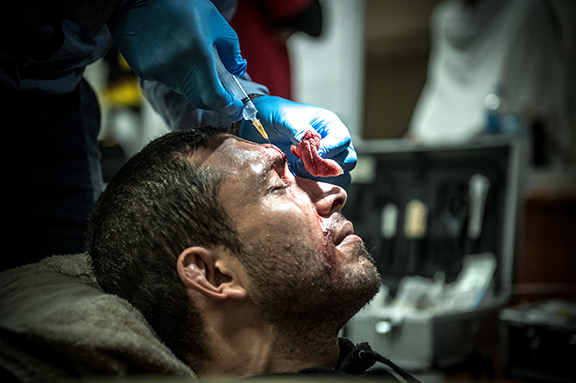
Ringside medicine is an area of sports and exercise medicine that is becoming increasingly publicised and explored; however, many feel detached from the profession as they do not understand what ringside medicine involves and how to get started in it.
This article is for medical students and doctors who are exploring a career in sports and exercise medicine and are curious about the world of ringside medicine alongside what it has to offer.
🥊🔔What is Ringside Medicine?
Ringside Medicine is a niche speciality in sports medicine focused on providing medical care during combat sports events and ensuring the safety and health of fighters. As a career, a ringside physician is appointed by a governing body to decide whether each fighter is fit to compete in a combat event.
In your role, you’re involved in medical supervision, emergency response, and you represent the clinical reasoning for why a fighter should or should not continue fighting
🎯Skills needed
- Clinical Judgement: recognising when a fighter needs intervention or a break based on their gait or response to instruction
- Boldness: The confidence to stop a fight, especially in high-stakes professional bouts.
- Pattern recognition: Knowing the signs for concussions and how to screen for them via a neurological assessment
- Collaboration: Before fight night, your responsibility as a Ringside physician is to co-ordinate with the emergency crew and establish quick exits for patients on strollers
- Working under pressure: your decisions are watched and could be scrutinised.
Training & Proficiency: A Step-by-Step Guide
The certification for a ringside physician comes primarily through the Association of Ringside Physicians and ABC Boxing
This stepwise approach was taken from How to Become a Sports Team Doctor in the UK? – Advance Study
- Medical Degree: Obtain a Bachelor of Medicine, Bachelor of Surgery (MBBS or MBChB) degree from a recognised UK medical school. This typically takes 5-6 years.
- Foundation Training: Complete a two-year UK Foundation Programme, gaining experience in various medical specialities.
- Speciality Training: Choose a speciality that provides a strong foundation for sports and exercise medicine. Common routes include:
- General Practice (GP)
- Emergency Medicine
- Musculoskeletal Medicine
- Rehabilitation Medicine
- Sports and Exercise Medicine (SEM) Training: After completing foundation training, apply for a competitive training post in SEM. This usually lasts four years. The SEM curriculum covers:
- Clinical Sports Medicine
- Exercise Medicine
- Musculoskeletal Medicine
- Teamwork and Leadership
- Certification: Upon successful completion of SEM training, you will be awarded a Certificate of Completion of Training (CCT) and be eligible for entry onto the GMC Specialist Register as a Consultant in Sport and Exercise Medicine.
✍🏾Differences in the medical school systems
| UK Pathway | US Pathway |
|---|---|
| 5/6 years: Medical School | 4 years: Undergraduate degree |
| 2 years: Foundation training | 4 years: Medical school |
| 2-3 years: Core medical training | Acute Care common stem |
| 4 years: Higher specialty training post in Sports & Exercise medicine |
Based on the interview with board-certified US Ringside medicine physician Andrea V.Hill, the time taken to be proficient in ringside medicine as a specialist would be 1-2years with previous combat experience. Without prior exposure to the combat sports and protocols, this would be 3+ years. Typically, you don’t have to be certified in combat medicine, but commissions increasingly require it.
🥊🎬A day in the life
Pre – Fight ⚖️
- Conduct brief physicals to confirm fitness to fight; a physician must sign off.
- Coordinate emergency plans (e.g., stretcher routes) with venue and ambulance crews.
- Set up a dedicated medical area for laceration repair.
Preparations for fight night start with weighing in the athlete, which at times is done the night before if it is a pro athlete, getting necessary paperwork done and setting up your observation station (suturing kits, emergency devices) in front of the ring before the fight starts
You’re working in a team of around 4 or 5, and there’s also a great opportunity to carry out relevant physical examinations on the athletes as a medical student if your supervisor approves
During 🛎️
Observe, observe, and observe again.👀🔎
During Fight:
- Required ringside presence (US); fights cannot proceed without a physician.
- Continuously assess fighter injuries.
- Amateur Fights: Physician can stop the fight directly.
- Pro Fights: Physician calls a timeout → Ref officially stops the fight.
Once the fight starts and progresses, a major part of your attention is focused on the performance of the player – that is, their physical well-being. You watch their gait for abnormalities, or you focus on their facial lacerations to know how best to fix them.
Quick assessments like pupil checks are done during the fight, and neurological examinations are done to screen for concussions or more serious acute presentations. For a fight to continue, a doctor must be present ringside, showing how important your clinical judgment can be in a sports context. So essentially, you are glued to the ringside unless there are additional medical students or additional physicians to hold the station down
Being in your seat, ready to intervene as a physician or support as a medical student, lets you take it all in: the fight itself and the stands full of buzz and anticipation.
After 🧹🍜
- Conduct physicals on all fighters to address injuries and provide follow-up instructions.
- Assign mandatory fight suspensions based on injury severity to ensure adequate recovery time.
The night is done; you clean up a bit and, most importantly, eat out with your team to build rapport.
😮Common Injuries and Jaw-Dropping Experiences
- The most common injuries observed during fights are concussions and head trauma,
- Cuts that have the potential to impair vision and rare cases like hyphema were also reported as something that you could see on a fight night
- After interviewing Misha, a US medical student with extensive exposure to ringside medicine, I learned about a dramatic incident during a fight where a fighter, after being knocked twice and falling outside of the ring, nearly falling on the doctors’ station, was unable to recognise that he had already begun fighting again, highlighting the critical nature of what medical oversight could mean for the future of an athlete.
✋What’s in it for you
- Ringside medicine is a great career if you have an interest in combat sports; it means that you understand what you’re watching and can better relate to the athletes that you’re working with.
- This career pathway is dynamic, so it does not get routine or mundane because every fight is different.
- If you’re able to become a promotion physician, i.e., a UFC physician, it is a good full-time salary to live on
⚖️Work-life balance
Most combat-sport fight nights are on the weekend. This can be a challenge if you have small children, as it makes it harder to give up your weekends
Dr Andrea Verbug Hill’s Journey
She started by training in Muay Thai and boxing for over 20 years. Following the tragic event of her husband’s passing after a battle with mental health and Chronic traumatic encephalopathy (CTE), Dr Andrea V. Hill began to practice ringside medicine professionally and build more of a career out of her interests.
She has worked as a ringside physician on worldwide pay-per-view television with every major promotion in the world. Having been present in championships where there is a lot on the line, Dr Andrea V.Hill has also learned how to work under pressure.
Dr Andrea V. Hill describes an important shift in the combat sport culture. Dr V. Hill mentions how it was common for fighters to not take their symptoms seriously. However, because of an increase in education and awareness, fighters are now getting better at changing their mindset towards their symptoms.
Misha’s Journey
Misha Dilghami is a fourth-year US medical student who originally wanted to be a surgeon, but through her passion and interests in boxing and the combat sport community, she discovered the world of ringside medicine. Misha continues to share her experiences in ringside medicine, and through visibility, she now shares the exciting nature of this career.
It was the combination of knowing the sport and bonding with the boxing community, alongside having a good network, that opened up the opportunity to see for herself what ringside medicine as a profession could offer. To add, her medical elective in sports medicine allowed her to have a clearer vision of the area of medicine that she saw herself progressing in.
In our interview, Misha clarifies how social media often glamorises specialities, and the same can be said about ringside medicine. There are common aspects to the profession that can be found in all other specialities – admin and paperwork. However, there are thrilling parts too. Many may be drawn to the exciting, unpredictable nature of not just the sport, but the profession too. And with ringside medicine, Misha mentions how the fun is in the fast-paced nature of your responsibilities and the opportunity to work with the fighters who share something in common with you. The love for the sport.
🧱 Disadvantages and barriers faced in the profession
- A profession kept under the radar
- Unlike specialities like orthopaedic surgery, paediatrics or cardiology, because ringside medicine is not a majorly advertised profession, pathways to getting into the profession as a physician, or gaining exposure and opportunities as a medical student, can often be obscure.
- Pay
- Unless you can get a job as the physician for a promotion such as the UFC physician, the pay is not as substantial; however, this profession is developing, and this could change in the future.
Solution:
- Ringside medicine is now becoming increasingly known because of doctors and medical students – such as Misha – who are showcasing the profession on social media.
🧠🤔Some opinions worth noting
Emergency medicine training has good transferable skills to apply to ringside medicine/similar patient screening frameworks
- Training in emergency medicine provides you with the essential skills needed for assessing trauma quickly and effectively, particularly in high-stakes environments like fight nights.
Anyone can become a ringside physician
- Dermatologists, paediatricians and more can all become ringside medicine physicians. You don’t have to be an emergency doctor, but you do have to be a doctor to work or fill the role of a ringside physician.
Have a good understanding of how to perform a neurological assessment:
- Because concussions are so common in the sport, through a neurological assessment you need to be able to detect red flags that could lead to severe long-standing injuries.
💡Words of Advice:💡
Misha:
‘Don’t give up on your dream. If this is genuinely something that you want to do. And I mean you like, not something that other people want for you. If this is something that you want to do for yourself, it may take time. It may take 1, 2, 3, maybe even 10 years. But if it’s something that you want, you will achieve it’
🚶🏾♀️Next Steps
- Contact the UK Boxing Commission or local promoters to inquire about shadowing opportunities.
- Explore sports medicine medical electives
- Join the Athlete Medicine Academy for more information: Athlete Medicine Academy
Conclusion
In conclusion, Ringside medicine is the medical practice focused on providing medical care during combat sports events and ensuring the safety and health of fighters. It is for anyone with a medical background who has an interest in combat sports, is trained in the sport or is a sports and exercise physician
With a strong support system, whether that’s your family, friends or mentors, you can break into ringside medicine if this is the career you envision for yourself.
Information and opportunities
Sites for More information
- Athlete Medicine Academy Membership Application
- https://www.englandboxing.org/doctors/
- Home – Association of Ringside Physicians
- https://www.barc.org.uk/
- Ringside Doctors Development – IBA
Learn More
Follow Dr Andrea and Misha on social media:
- Misha: @mishadilama
- Dr Andrea: @fightdoctress

Reviewed Dr Andrea Verburg Hill MD, MBA
Ringside Doctor